

Why CoW Protocol?
MEV Protection
Batch auctions with uniform clearing prices eliminate frontrunning and sandwich attacks. Your trades are safe from MEV bots.
Better Prices
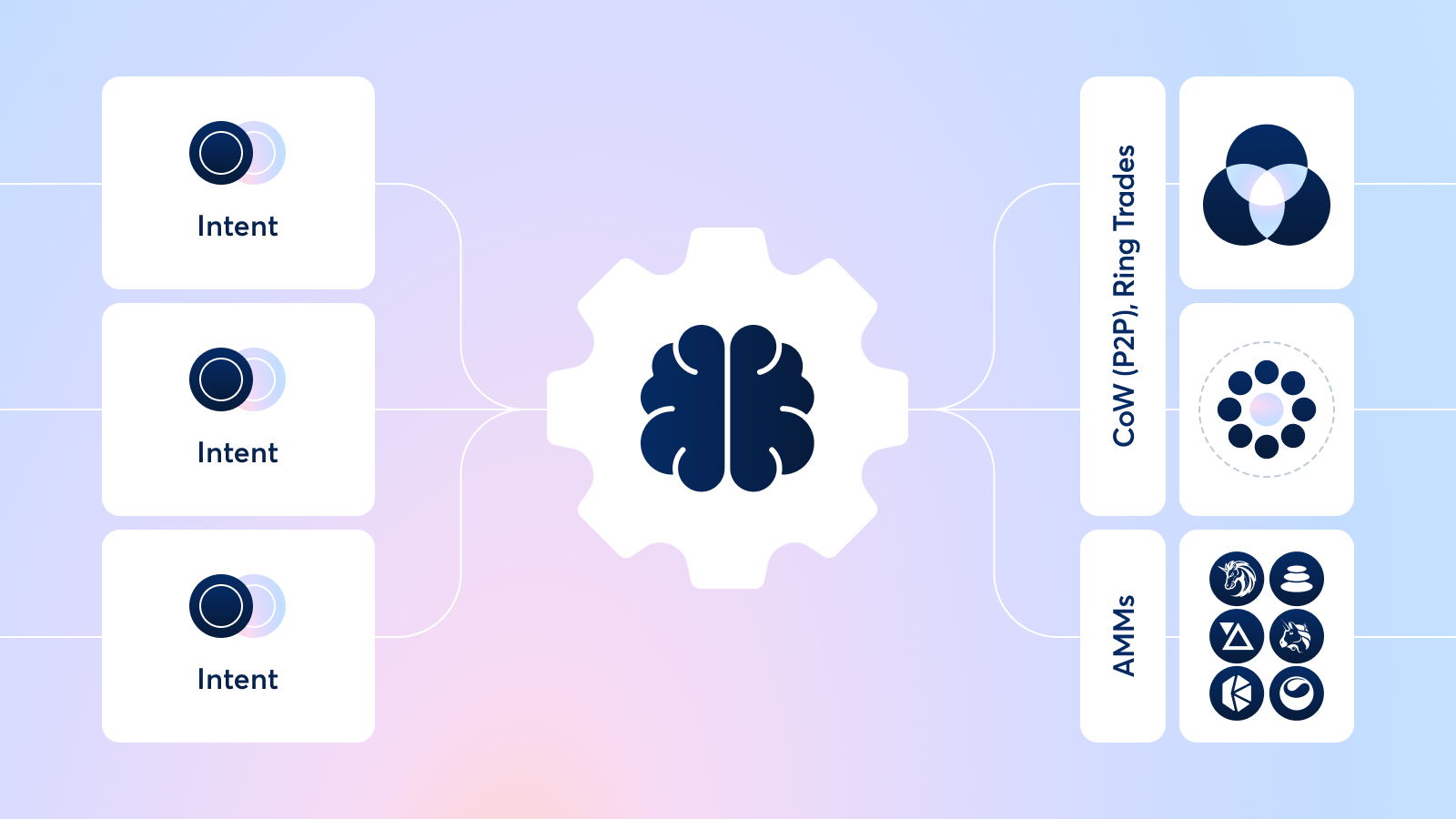
Solvers access on-chain DEXs, private market makers, and peer-to-peer matching (Coincidence of Wants) to find the best execution.
Gasless Trading
No ETH needed for gas. Fees are taken from the sell token. If the order can’t execute, you pay nothing.
No Failed Transactions
You sign a message, not a transaction. Failed orders cost you nothing — ever.
Key concepts
1
Intents
Users express what they want to trade, not how. You sign a message specifying tokens and amounts — solvers handle the rest. Learn more
2
Solvers
Professional third parties compete in an auction to fill your order at the best price. They scan all liquidity sources: AMMs, aggregators, private market makers, and other users’ orders. Learn more
3
Batch Auctions
Orders are grouped into batches and settled together, enabling peer-to-peer matching (Coincidence of Wants) and uniform clearing prices that eliminate MEV. Learn more
4
How Intents Are Formed
From intention to quote to signed order — understand the fee pipeline that determines your final amounts. Learn more
Order types
Market Orders
Instant execution at the best price
Limit Orders
Set your price, gasless and free
TWAP
Split large trades over time
Programmatic
Condition-triggered smart orders
CoW Hooks
Pair any action with your swap
Milkman
Oracle-protected DAO orders
Start building
Widget
Drop-in swap UI for your app
TypeScript SDK
Full TypeScript SDK for trading
Python SDK
Trading bots, data, and automation
REST API
Language-agnostic order management